
Metal Roof vs Shingles in Florida: What Holds Up Best in Storms?
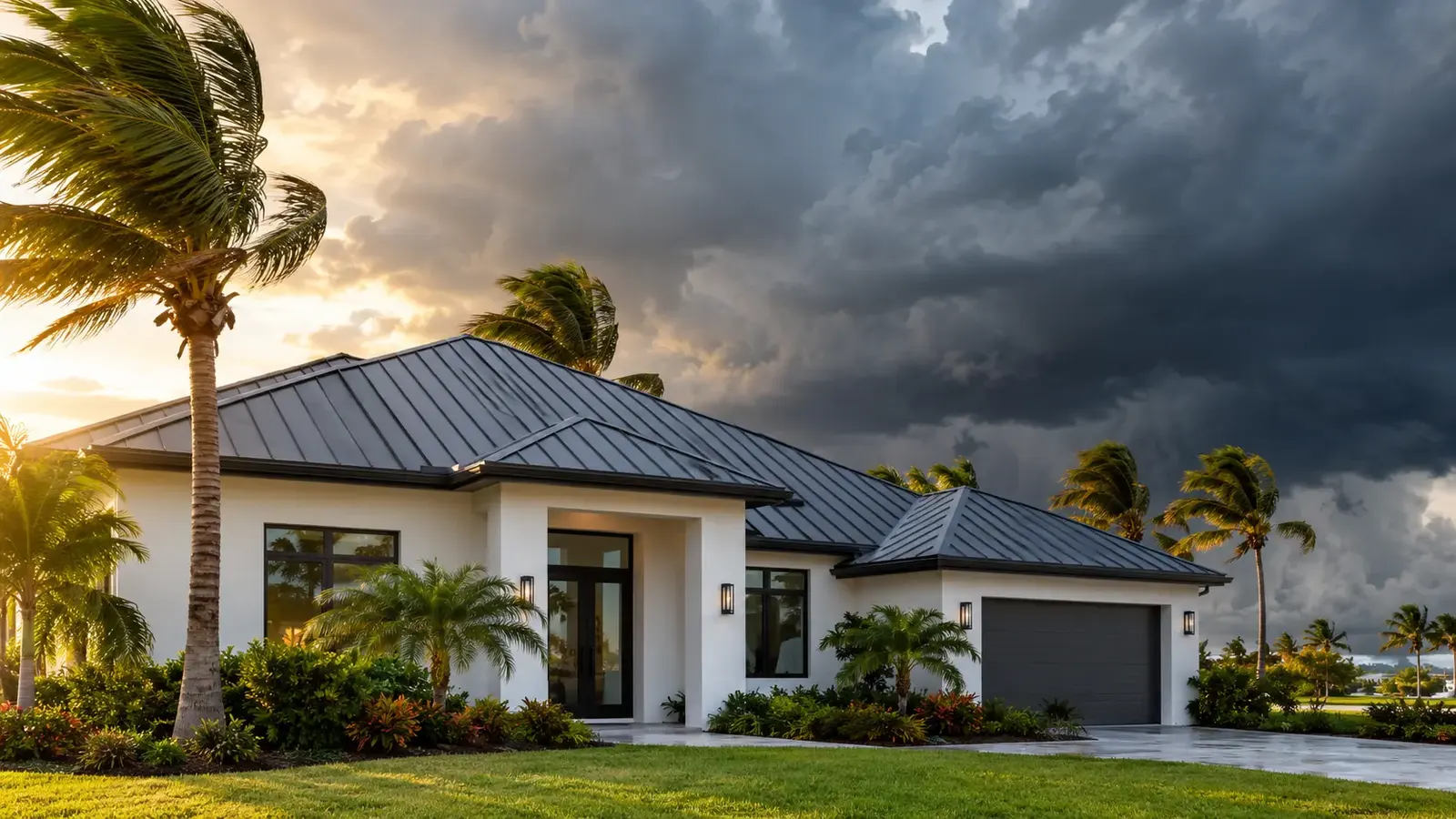
Hurricane Ian made landfall near Cayo Costa in September 2022 as a Category 4. If you lived in Lee County that fall, you remember the blue tarps. They stayed on rooftops for months.
Since then, one question has come up more than almost any other: should the next roof be metal or shingles? In most states, the metal roof vs shingles debate is about looks and budget. Here, it's about whether the roof is still on the house in October. We install both, and we'll tell you where each one falls short.
The Short Answer
Metal wins on storm performance. The metal systems we install are rated for winds of 160+ mph, while the dimensional shingles are rated up to 130 mph. Both meet Florida Building Code, but code is a minimum, and near the coast we specify products with higher ratings than the minimum requires.
Does that make shingles a mistake? No. A well-installed shingle roof protects plenty of homes, and it costs a lot less. We'll get to the money in a moment. First, here is why roofs actually fail, because it isn't what most people picture.
Where Roofs Actually Fail
The big open field of shingles or panels in the middle of the roof is rarely the problem. Trouble starts at the edges, the ridge, the corners, and anywhere something pokes through the roof, like vents, pipes, chimneys, and skylights. Wind gets under an edge, lifts it, and works its way inward. Rain gets driven sideways in a hurricane, so it finds every gap in the flashing. A branch takes out one section, and the next squall comes straight through the hole.
Then there's the wear nobody talks about. A tropical storm that barely makes the news still flexes fasteners and loosens seals. Two or three of those in a season do more damage than most people expect.
So a roof is a system: deck, underlayment, flashing, fasteners, and the covering on top. The covering gets all the attention, but the rest decides whether it holds.
What Metal Gets Right
Start with how standing seam is built. The panels lock together along their full length with the fasteners hidden underneath, so there's no loose edge for wind to grab. Picture one connected sheet instead of thousands of small overlapping pieces. The metal roofing we install is rated above 160 mph. A rating isn't a promise (it only counts if the roof goes on to spec), but it's a serious head start.
Impact is more complicated than the brochures suggest. Our metal systems carry a Class 4 rating, the top level in the standard test, and a big limb can still leave a dent. Dents are ugly, but they aren't leaks, and a dented panel that still sheds water beats a cracked shingle every time. Hail is rare here anyway. Flying debris is the real worry.
Then there's the other nine months of the year. Metal doesn't rot, crack, or grow algae. PVDF finishes hold their color in Florida sun. Reflective panels can cut attic temperatures by up to 25°F, and many qualify as cool roofs under Florida's Energy Code, so your AC cycles less.
Noise is a common question. Over a solid deck with underlayment, metal is no louder in the rain than other roofing, and some homeowners actually like the sound.
What Metal Costs You, and What It Can't Fix
Metal costs more upfront. That's the honest answer, and it's roughly what you'd pay for tile.
Metal also depends heavily on who puts it on. Flashing and edge details decide how it behaves in wind, and exposed-fastener panels have screws that need an occasional look. And no panel can fix a rotten deck. If the plywood underneath has gone soft, you've fastened a great roof to a bad base.
Shingles Are Better Than Their Reputation
Dimensional asphalt shingles cover most of the roofs in Southwest Florida, and not by accident. They're rated up to 130 mph, Class 4 impact versions exist, and the copper-infused granules we use keep algae from taking over in the humidity. They're also the cheapest system to install, the job usually takes one to two days, and repairs are quick.
If money is tight, or you don't plan to stay in the house forever, a good shingle roof isn't settling. It's a reasonable call.
Where Shingles Lose
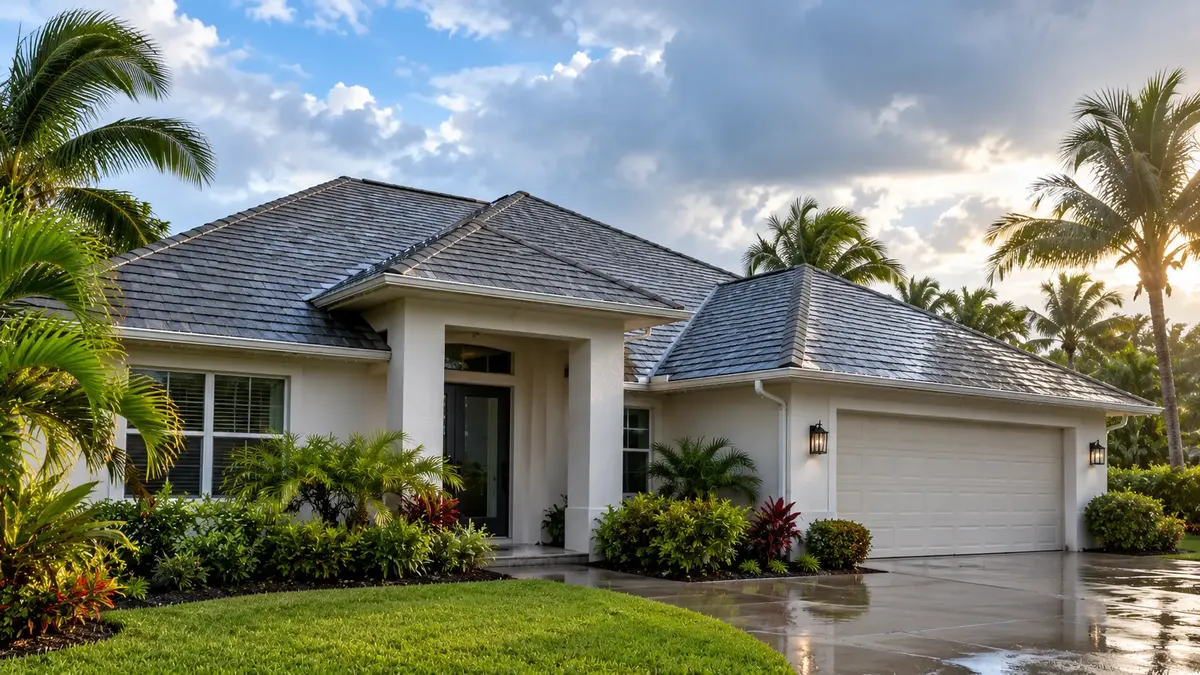
The weak point is the seal strip, a line of adhesive that glues each shingle to the one below. When wind breaks that seal, the shingle lifts, flaps, and tears away, and the underlayment is suddenly exposed. That's how a few missing shingles turn into a roof-sized problem.
Age makes it worse. Heat and UV wear shingles down faster here than in cooler states, so expect roughly 20 to 30 years, depending on ventilation and exposure. As the adhesive dries out, an older roof loses wind resistance. A 22-year-old shingle roof and a five-year-old one are very different bets going into a storm.
Standard shingles also bruise and shed granules when debris hits them, and those granules protect the asphalt from the sun. If you go with shingles, we'd point you toward the Class 4 impact-rated kind.
Metal Roof vs Shingles: Side by Side
The numbers below come from the systems we install in Southwest Florida.
| Metal roof | Asphalt shingles | |
|---|---|---|
| Wind rating | 160+ mph | Up to 130 mph |
| Impact rating | Class 4 | Class 4 available |
| Typical lifespan | 50+ years | 20 to 30 years |
| Upfront cost | Higher | Lowest of any system |
| Maintenance | Minimal | Periodic checks |
| Heat | Reflective, cooler attic | Absorbs more heat |
The Money Question
If you only compare day-one prices, shingles win. Every time.
Over thirty years, though, the picture changes. Imagine two neighbors on the same street who each stay in their house that long. One goes with shingles, the other with metal. The shingle owner is probably paying for a second roof somewhere between year 20 and year 30, and the metal owner probably isn't. That's a hypothetical, and your numbers depend on your roof, but it's the math worth doing. If you plan to sell within ten years, shingles usually come out ahead.
Want a ballpark before anybody visits? Our roof cost calculator gives you a quick estimate, and a free inspection pins down the real number.
Standing Seam or 5V?
Metal comes in two main types here. Standing seam has concealed fasteners and continuous locking seams, which makes it the most durable. Exposed-fastener panels, usually called 5V or corrugated, cost less and still perform well. On a tight budget, 5V is a solid middle ground. If you want the longest-lasting system and a cleaner look, standing seam is worth the extra. Our guide to 5V vs standing seam metal roofs goes through the tradeoffs.
A Good Install Matters More Than the Material
Roofs rarely fail because of the brand on the box. They fail at the deck, the underlayment, the flashing, and the fasteners. A good job includes:
- A full tear-off and deck inspection, with damaged sheathing replaced
- Underlayment rated for Florida's climate
- Proper flashing at every vent, pipe, and valley
- The right fastener pattern for the product
- A pulled permit and county inspections
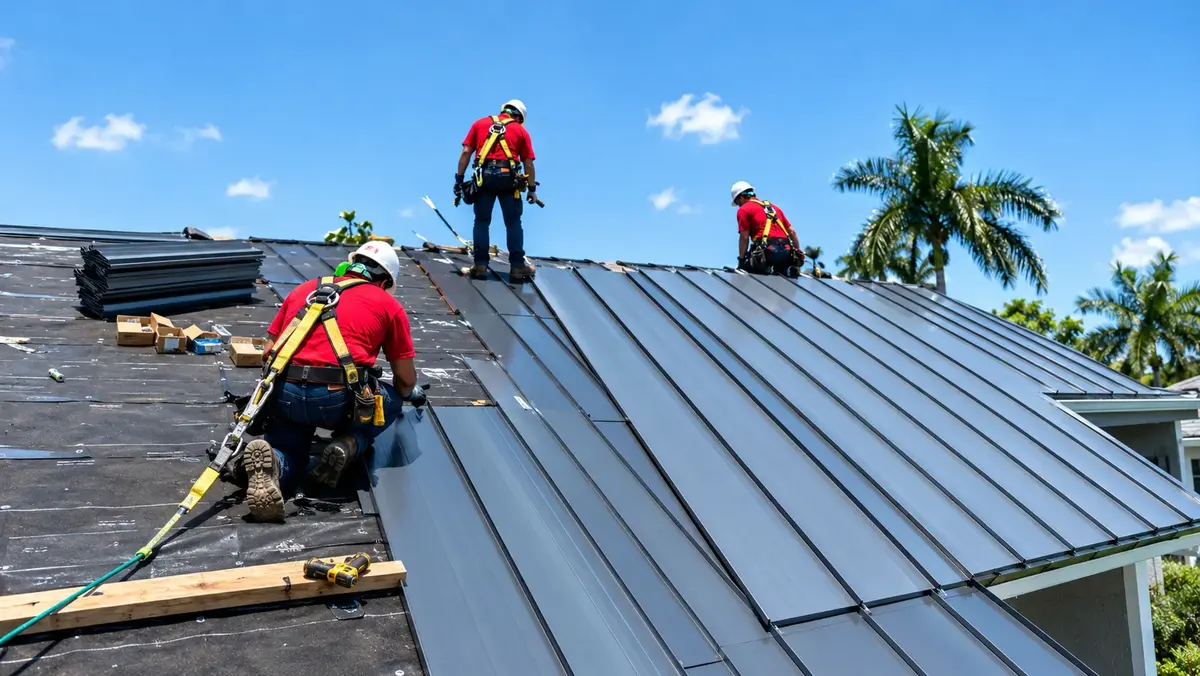
We pull permits on every job, and our installers are in-house employees, so the crew on your roof knows our standards. If you're planning a roof replacement, ask any contractor how they handle each item on that list. Vague answers tell you something.
Call your insurance agent, too. Ask about a wind mitigation inspection, since the roof covering, deck attachment, and roof shape can all affect your premium. It's easier to ask before you pick a material than after.
Two Myths We Keep Hearing
"Metal roofs make the house hotter." In most cases, the opposite is true. Reflective panels send a lot of the sun's heat back up, which is why many of them qualify as cool roofs.
"Metal roofs are loud." We covered that above. A solid deck and underlayment take care of it.
What Customers Tell Us After Storms
The best proof is how a roof looks a few seasons later. One customer who had us install a metal roof told us it still looked great three years on, after a hurricane and several tropical storms, and that it had helped with the electric bill, too. A Lehigh Acres homeowner told us a roof we installed has come through three major hurricanes. Results vary by home and installation, but feedback like that is why metal is so popular along the Gulf Coast.
Already Have Storm Damage?
Don't wait for the next rain. Lifted flashing, missing shingles, and small leaks get worse fast in Florida's weather. Take photos before anything gets moved, call your insurance company early, and get a temporary fix in place. Our team handles roof repairs and will tell you honestly whether a repair makes sense. As a rule of thumb, if the fix costs under about 30% of a replacement and the rest of the roof is solid, repair is usually the smarter move.
So Which Would We Pick?
If you plan to stay 15 years or more, live near the coast, or want low maintenance and a cooler attic, metal is hard to beat, as long as the upfront cost works for you. If budget is the main worry, or you might sell within ten years, shingles are the smarter spend, and a properly installed shingle roof is nothing to apologize for. Plenty of homes land somewhere in between. Your roof, your budget, and how long you'll stay in the house settle it.
Frequently Asked Questions
Is a Metal Roof Better Than Shingles in a Hurricane?
Usually, yes. Metal is rated for 160+ mph, and standing seam locks together along its whole length, while our shingles are rated up to 130 mph. Still, a well-installed shingle roof can handle storms too, and a sloppy metal install can fail. Installation decides a lot.
Is a Metal Roof Worth the Extra Money in Florida?
For homeowners who plan to stay, often yes. A metal roof lasts 50+ years with minimal maintenance and cuts attic heat. If you might sell soon, shingles can be the better value.
How Long Do Metal Roofs and Shingles Last in Florida?
Metal roofs typically last 50+ years. Shingles last roughly 20 to 30 years here, depending on ventilation, sun exposure, and how many storms they've been through.
Will a Metal Roof Lower My Insurance Premium?
It can, but it depends on your insurer and on the roof's wind-related features. Ask your agent about a wind mitigation inspection, which documents the roof covering, deck attachment, and roof shape, and see which credits may apply.
Can You Put a Metal Roof Over Existing Shingles?
Sometimes, over a single layer. We always inspect the deck first. If there's moisture damage, rot, or a structural concern, we recommend a full tear-off so the new roof performs the way it should.
Get a Free Roof Estimate
The metal roof vs shingles question doesn't have one right answer, but in Florida the stakes are higher than in most places. The best choice depends on your budget, how long you'll stay, and where your home sits. V&M Roofing serves Lehigh Acres, Fort Myers, Cape Coral, Naples, and the rest of Southwest Florida. Call (239) 201-5108, Monday through Saturday, 7 a.m. to 7 p.m., or request your free inspection online. We'll walk you through both options and give you a straight recommendation.